| ANGIOMA
SENILIS (CHERRY ANGIOMA) |
 |
 WAT IS ANGIOMA SENILIS / CHERRY
ANGIOMA? WAT IS ANGIOMA SENILIS / CHERRY
ANGIOMA?
An angioma senilis (cherry
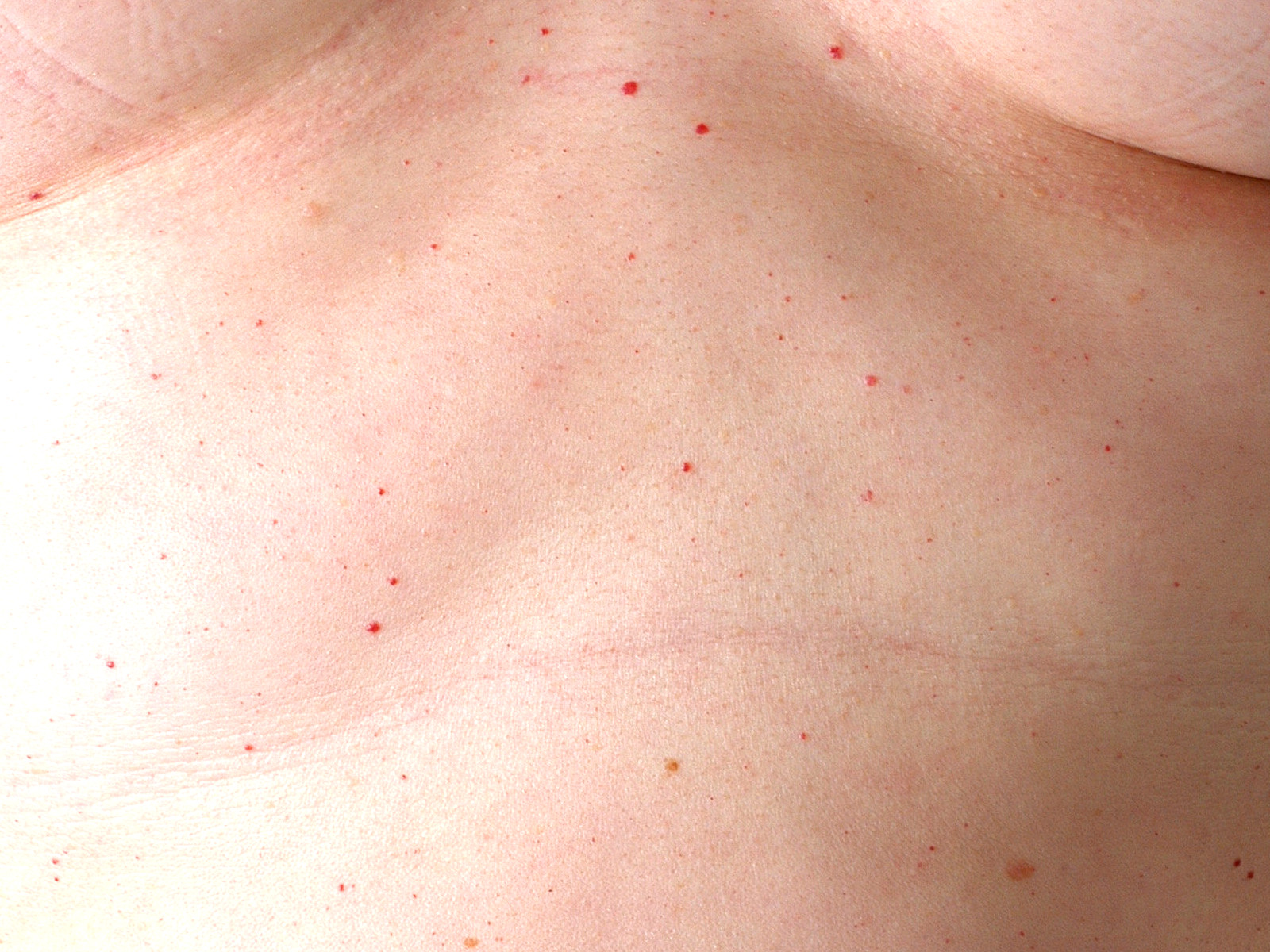
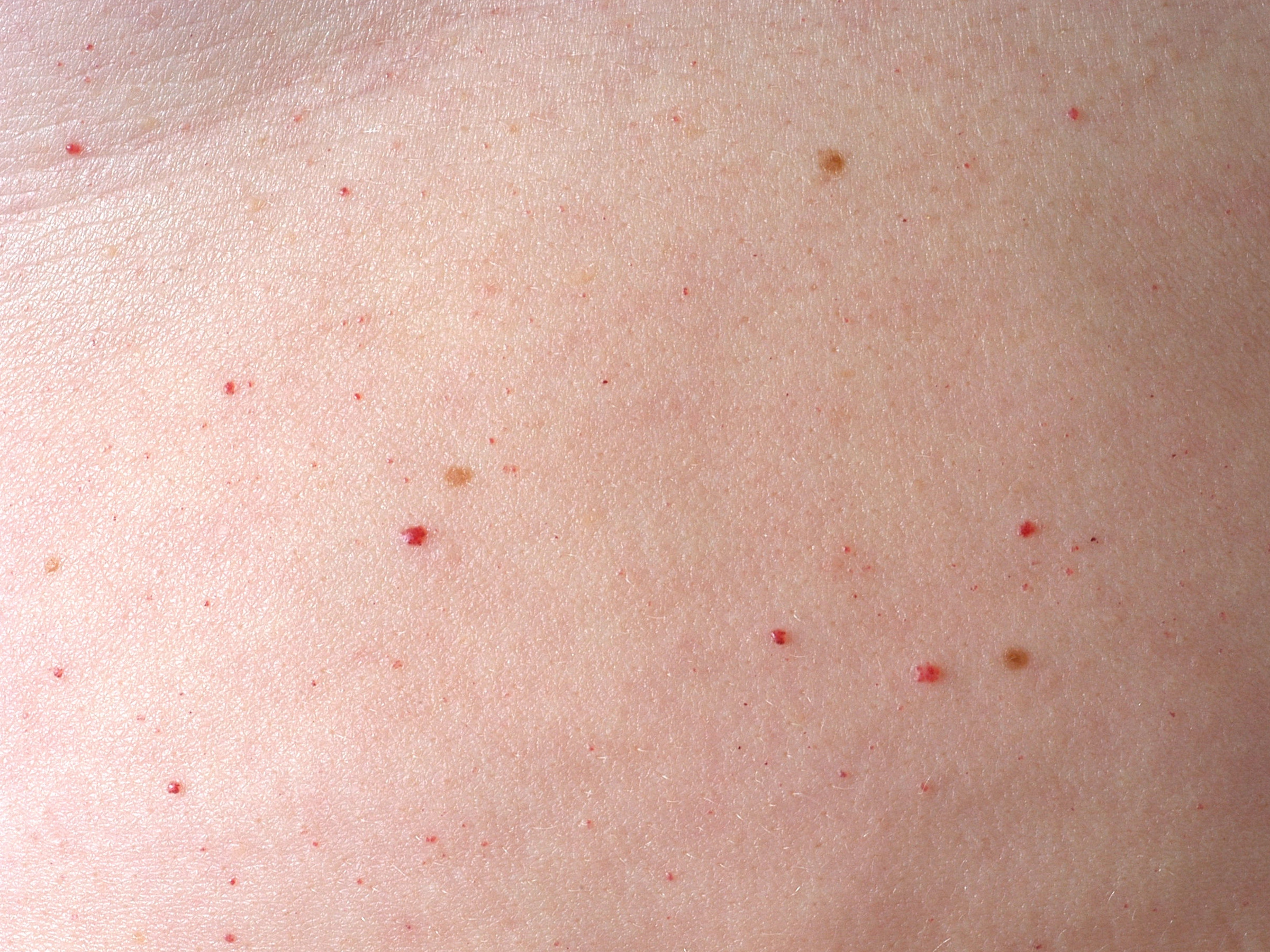
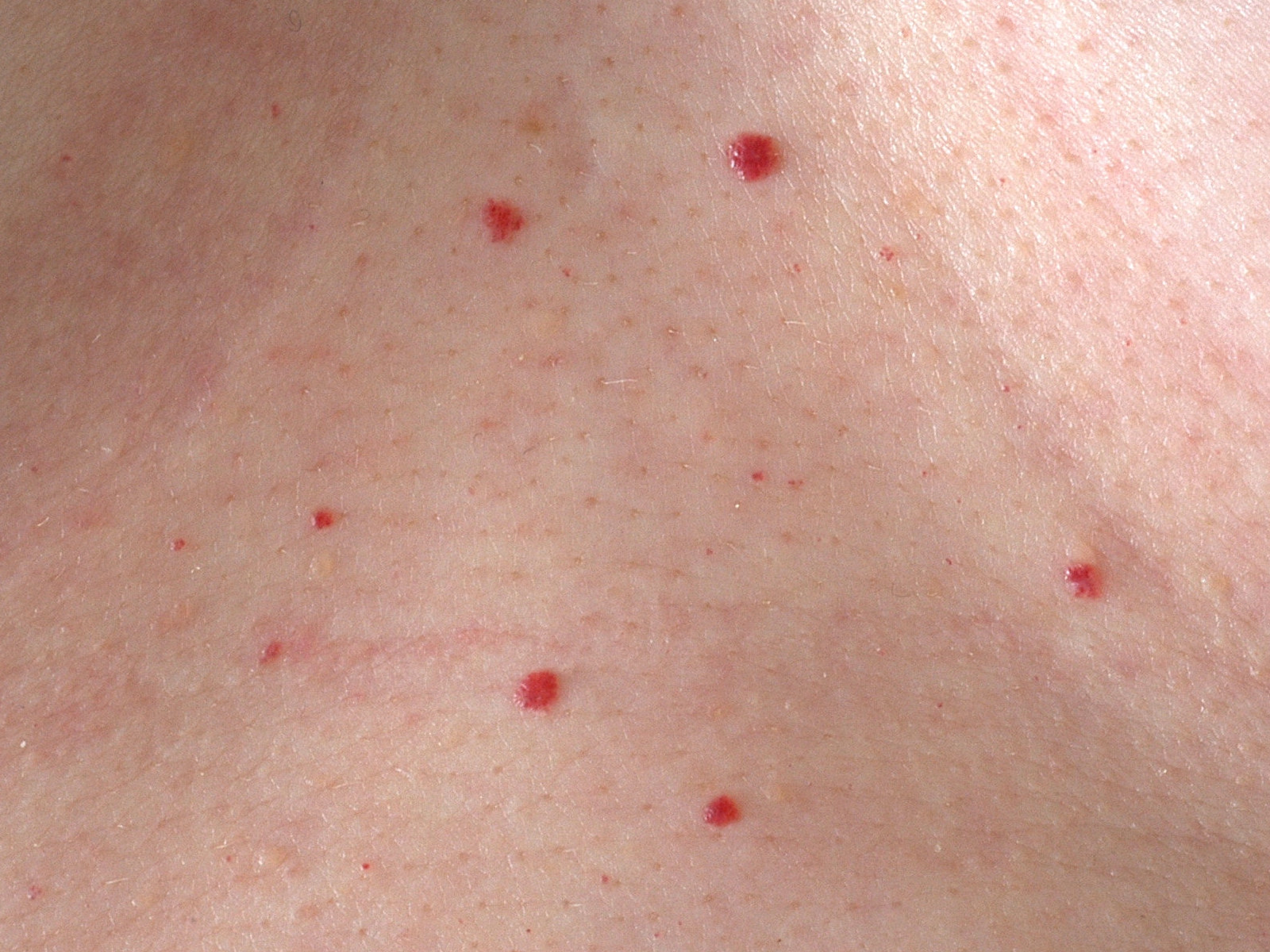
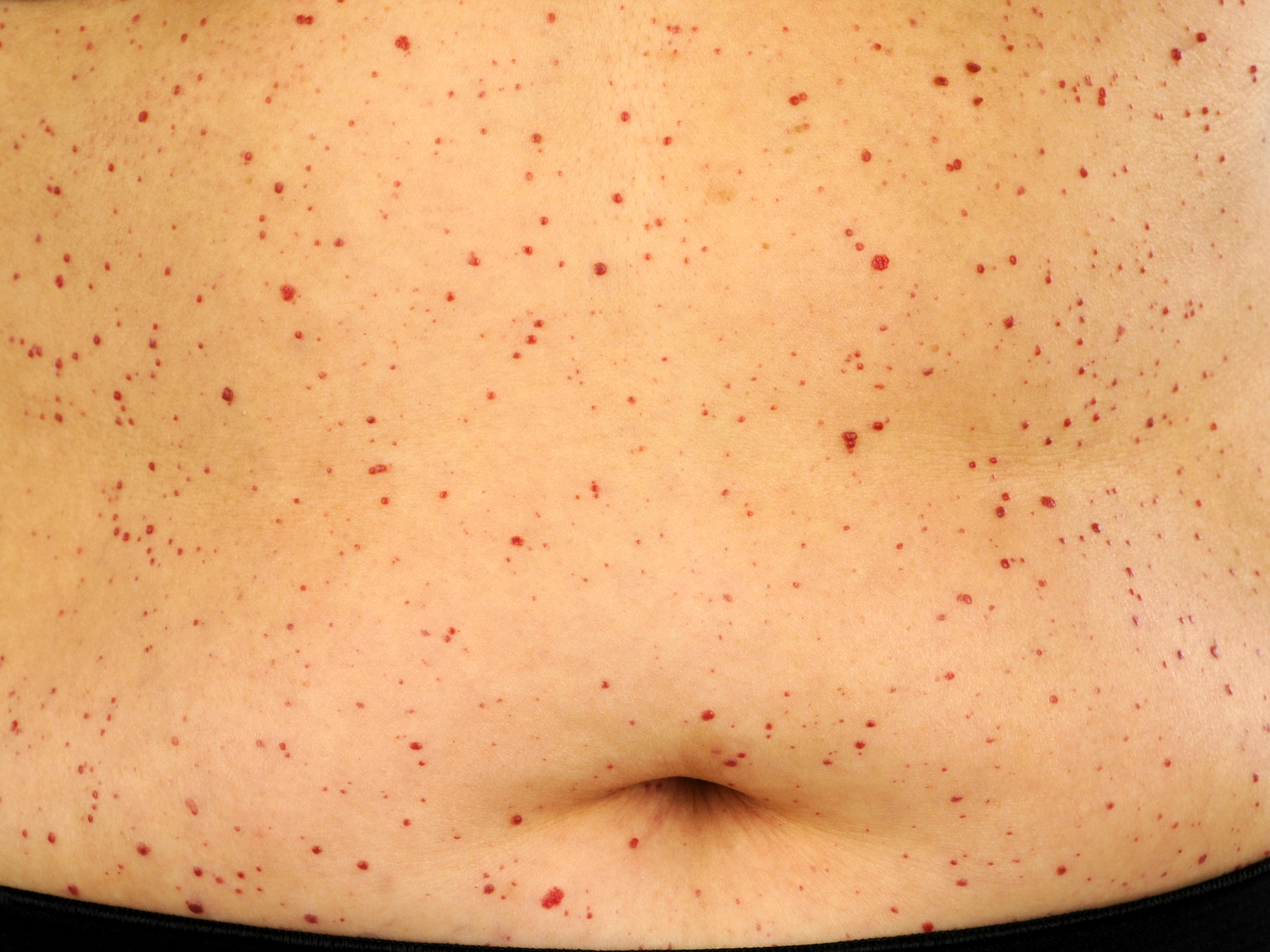
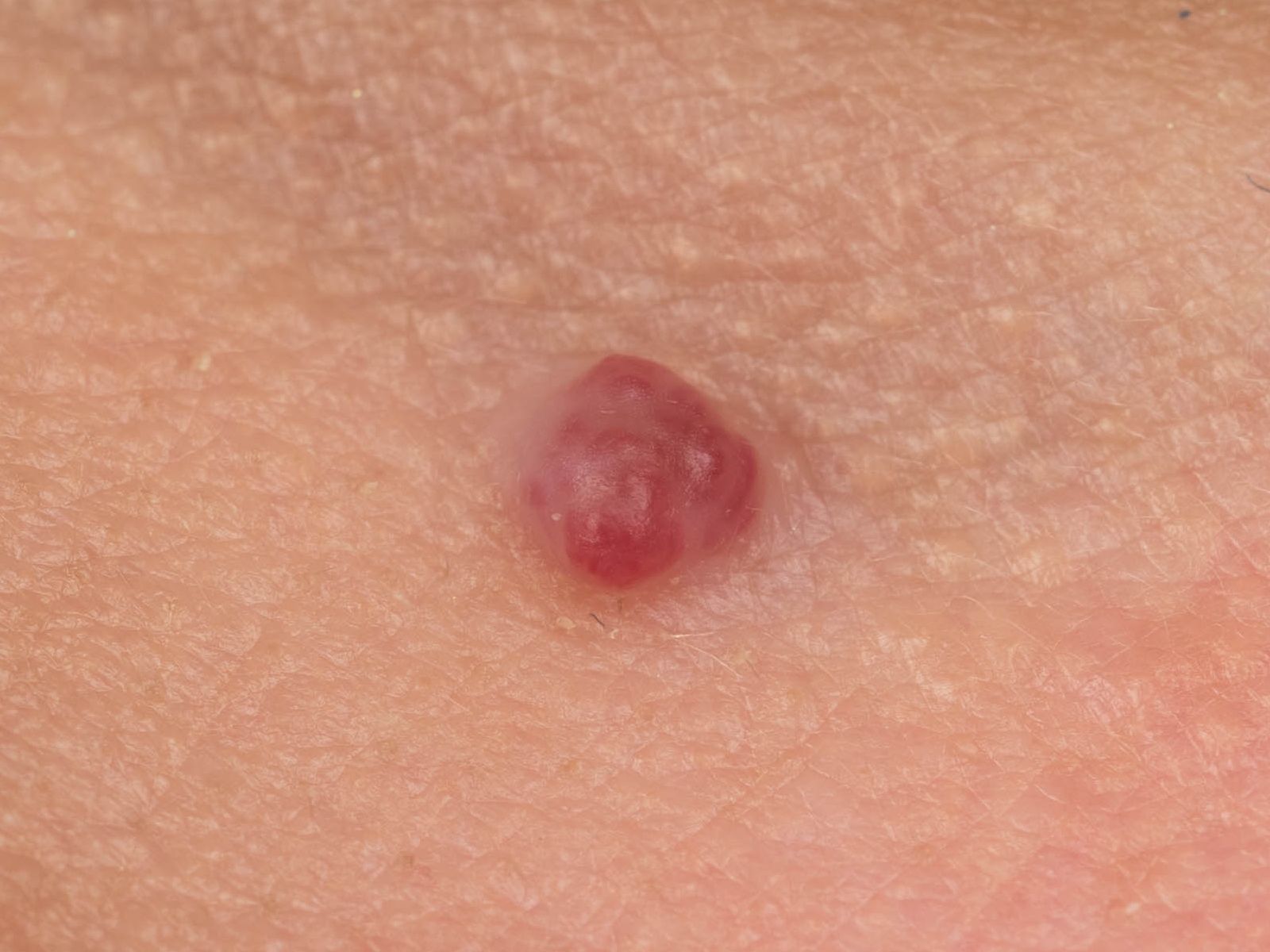
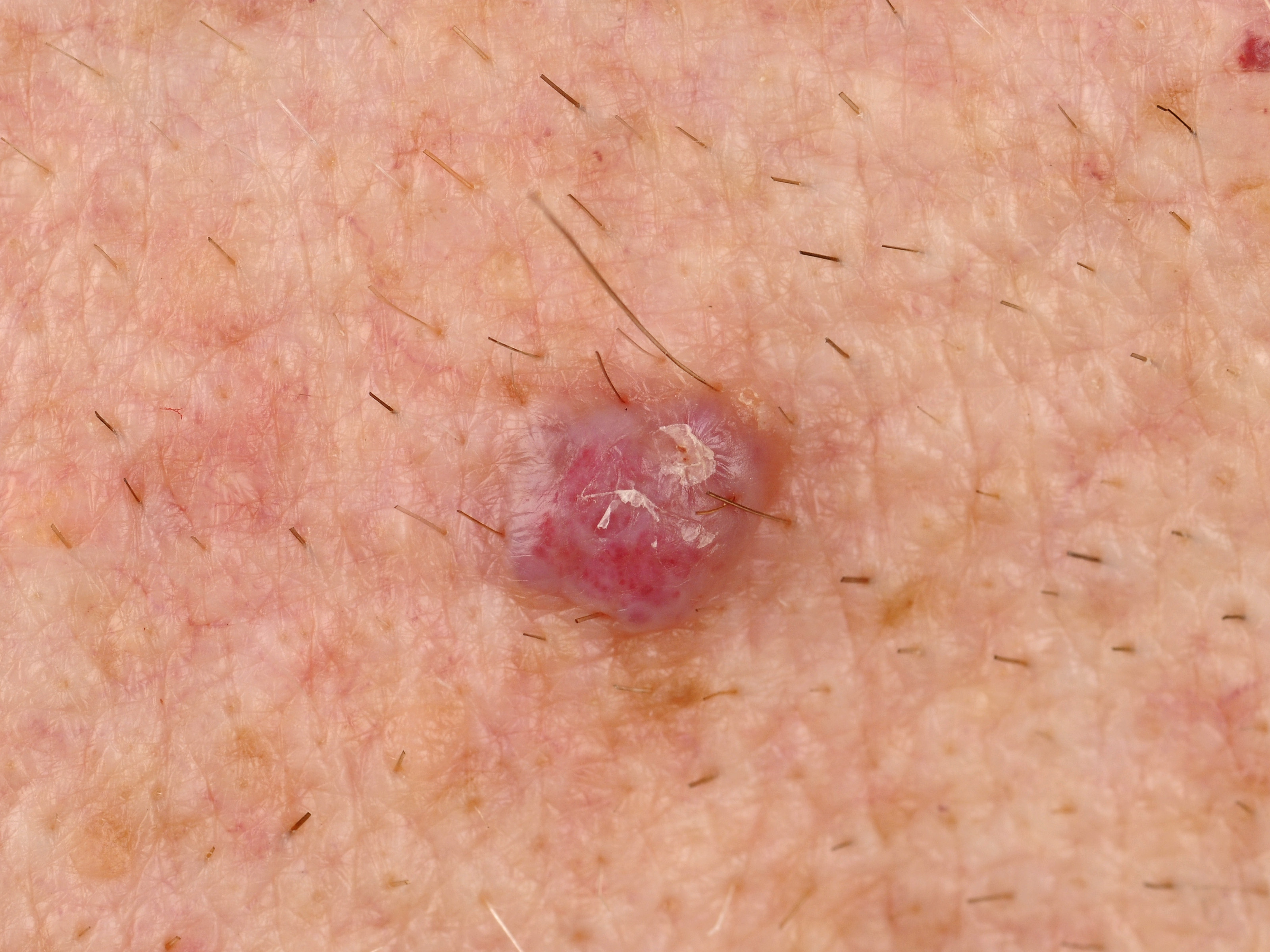
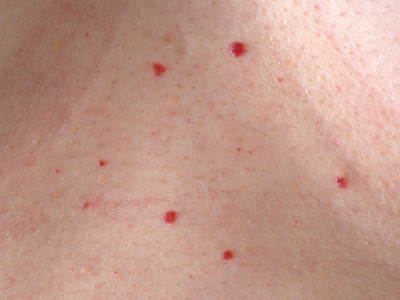
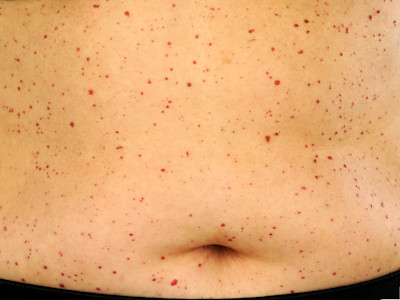
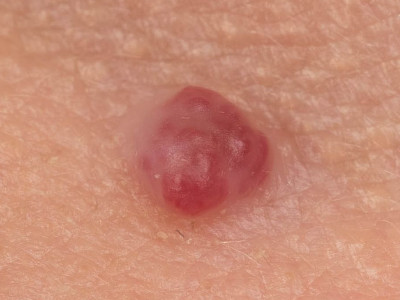
angioma) is a small, bright-red bump. It develops when a collection of dilated small blood vessels forms in one spot. Why this happens is unknown. They can appear anywhere on the body. They develop in old age, starting as early as the age of 25, and their number increases steadily. Dozens can already be present in people over 40. They do not cause any symptoms and are completely harmless, but they can be cosmetically unsightly. Because of their bright red (cherry-red) color, they are also called cherry angioma
or ruby spot.
WHAT DOES IT LOOK LIKE?
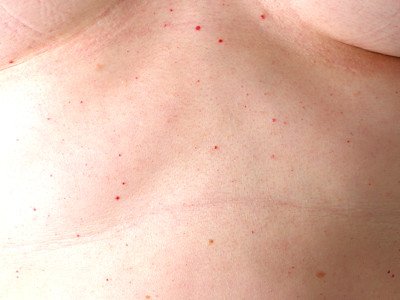
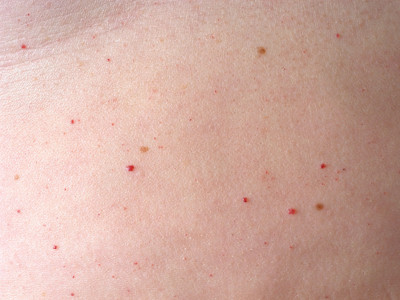
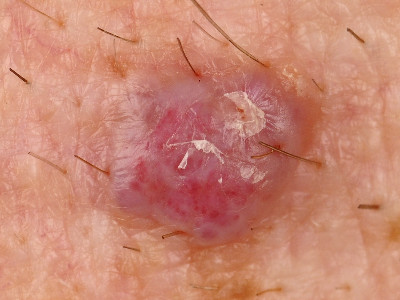
Small, red bumps appear all over the body. It starts with a few, which are also very small at first (1 mm), and gradually increase in size and number. They rarely grow larger than 6 mm. They are spherical.
 |
 |
 |
| angioma
senilis |
angioma
senilis |
angioma
senilis |
 |
 |
 |
| angioma
senilis |
angioma
senilis |
angioma
senilis |
WHO CAN GET IT?
Anyone can get it. Men and women are equally affected. It's more common in fair skin than in pigmented skin, and it's also more noticeable.
HOW IS THE DIAGNOSIS MADE?
Because it's so common and very recognizable, the diagnosis is made visually. Further testing is rarely necessary.
WHAT CAN BE DONE ABOUT IT?
Because these are benign vasodilations that don't cause any symptoms, treatment is not necessary. Sometimes the red bumps can be cosmetically very bothersome, and removal may be considered. This can be done in several ways:
Electrocoagulation:
The angiomas are touched with an electrocoagulator, which cauterizes them with electricity. A scab forms that later falls off. The skin is numbed beforehand by applying an anesthetic cream and covering it with plastic wrap.
Surgical:
This can be done by scraping the angiomas superficially with a blade or a sharp spoon (curettage). Because of postoperative bleeding (as they are dilated blood vessels), they must then be treated with a hemostatic solution or cauterized.
Laser:
The angiomas can also be cauterized with a laser specifically designed for blood vessels, the pulsed dye laser. This is the same laser used to treat port-wine stains.
|