| ACNE CONGLOBATA |
 |
 WAT IS ACNE CONGLOBATA? WAT IS ACNE CONGLOBATA?
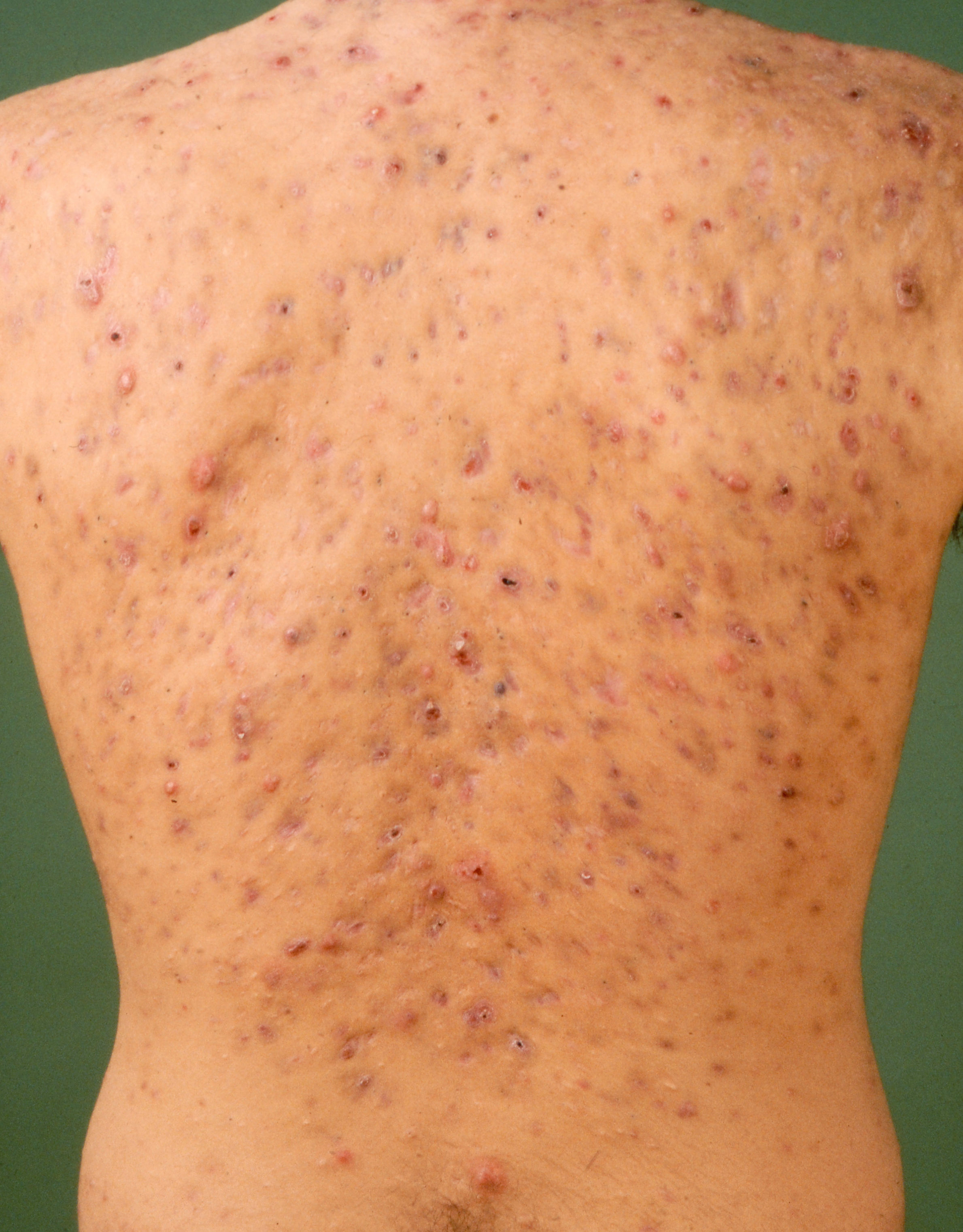
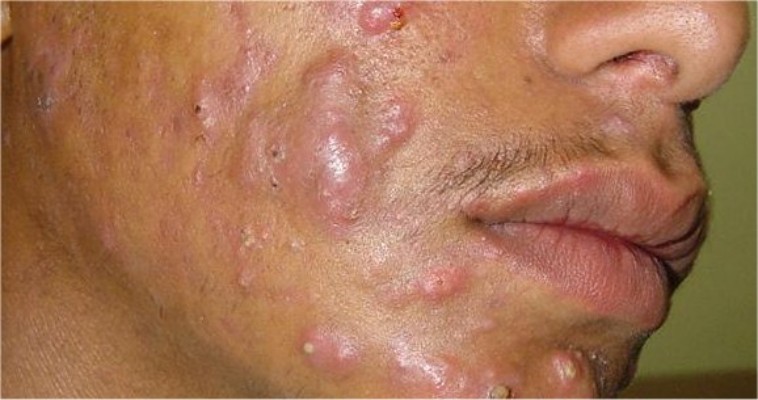
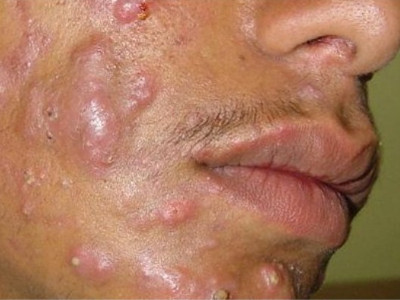
Acne conglobata is a severe form of acne in
which, in addition to pimples, large bumps,
pus-filled cavities (cysts), and scars develop. It
is a variant of ordinary acne, but much worse.
Individual pimples and cavities can merge into large
patches. It mainly occurs on the back, shoulders,
chest, and face. It is also known as acne conglobata
et cystica (with cysts).
 |
 |
|
acne conglobata |
acne conglobata |
WHO GETS ACNE CONGLOBATA?
Like regular acne, acne conglobata starts during puberty. It can also start in young adulthood. It can
persist for a long time, up to 35-40 years of age. It is more common in men than in women, but
women can also have it. It is related to the amount of testosterone in the blood.
HOW DOES ACNE CONGLOBATA DEVELOP?
Acne conglobata develops during puberty under the influence of hormones such as testosterone.
These hormones have a stimulating effect on the hair follicles and sebaceous glands, resulting in hair
growth and increased sebum production. Blocked hair follicles and overgrowth of skin bacteria cause
pimples, which in acne conglobata turn into deep inflammations (boils, abscesses) that can also form
closed cavities (medical name: cysts) filled with pus or sebum. Scarring occurs around the
inflammations, which can cause bulging bumps. It is not known why some people develop this severe
form of acne. It sometimes runs in families. Smoking may also play a role. Acne conglobata can also
be caused by medications that disrupt hormonal balance, such as corticosteroids and the anabolic
steroids sometimes used by bodybuilders, and by exposure to chlorine compounds such as
agricultural pesticides.
WHAT DOES ACNE CONGLOBATA LOOK LIKE?
Acne conglobata mainly occurs on the back, shoulders, chest, and face. As with normal acne, there
are pimples and white and blackheads. The pimples are often larger and more severe than with
normal acne and develop into subcutaneous inflammations (abscesses). Cavities (cysts) form that are
closed off and filled with pus or sebum. These often grow slowly. Smaller spots can merge into larger
spots. Connections (called tunnels or fistulas) can form between the different spots. Scarring occurs
around the inflammations. Sometimes, acne conglobata patients suddenly develop so much
inflammation around the acne spots that general symptoms such as fever, general malaise, joint pain,
and even blood poisoning occur. This acute condition is also known as acne fulminans.
HOW IS THE DIAGNOSIS MADE?
The diagnosis is based on the clinical picture, on how it looks. No further investigation is necessary. In
cases of acne fulminans with fever, blood tests are sometimes performed to determine the severity of
the inflammation.
HOW IS ACNE CONGLOBATA TREATED?
Once it is clear that it is acne conglobata, strong medications such as isotretinoin, antibiotics, and
sometimes even temporary prednisone are used. This is necessary to prevent severe scarring.
Isotretinoin
Isotretinoin is a medication derived from vitamin A that is used to treat severe acne. It is a powerful
drug, but it also has side effects. Isotretinoin affects the structure of the skin and the stratum
corneum, causing these layers to become thinner. This makes the pores in the skin less likely to
become clogged. Isotretinoin also reduces the amount of sebum and inhibits inflammation. It also
counteracts the growth of acne bacteria. The drug is teratogenic, which means that it causes serious
abnormalities in the unborn child. Women who use this drug must not become pregnant under any
circumstances. The drug also causes dry skin, lips, and eyes. Isotretinoin is usually prescribed for a
longer period, often longer than six months.
Antibiotics
If isotretinoin causes too many side effects or cannot be prescribed for other reasons, antibiotics are
used. These are special antibiotics with anti-inflammatory side effects that can be prescribed for
longer periods of time. Examples of these types of antibiotics are doxycycline, minocycline,
erythromycin, clarithromycin, azithromycin, and clindamycin. They are often combined with local
products that dissolve the stratum corneum, such as benzoyl peroxide gel, Acid-A-Vit (vitamin A acid
cream), or Differin (adapalene) gel.
Dapsone
Dapsone is also an antibiotic with anti-inflammatory side effects. It is sometimes used for acne
conglobata, but not as a first choice due to its side effects (including anemia).
Prednisone
In cases of severe inflammation (acne fulminans), prednisone is sometimes prescribed in combination
with antibiotics, either for a short period or in a low dose.
TNF-alpha inhibitors
TNF-alpha inhibitors such as infliximab and adalimumab are biologicals, expensive medicines that are
administered by injection or infusion. They are registered for the acne variant acne ectopica (also
known as hidradenitis suppurativa). They have also been tried in acne conglobata and acne
fulminans. They inhibit inflammation, but their use is not without risk because they inhibit the
immune system, and they are not reimbursed because they are not registered for acne conglobata.
Laser therapy
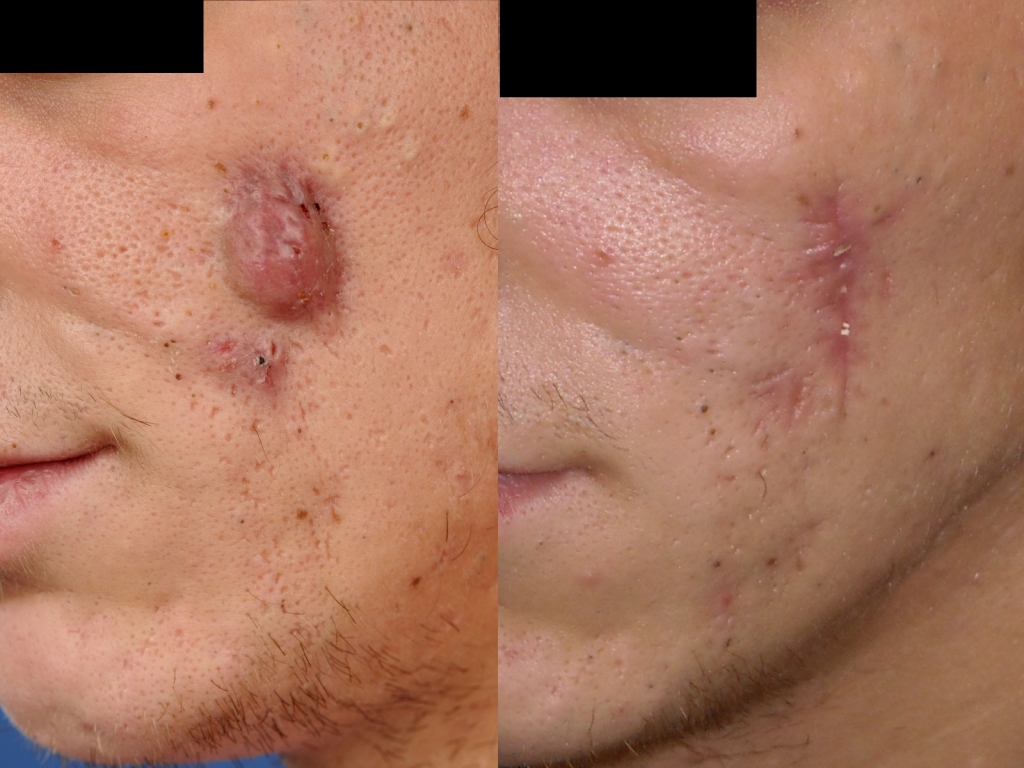
The scars caused by acne conglobata can be treated with fractional CO2 laser treatment.
Local corticosteroids
Local corticosteroids, in the form of a cream or a liquid (Kenacort A10) that is injected into the
abscesses, can reduce inflammation.
Surgery for residual scars
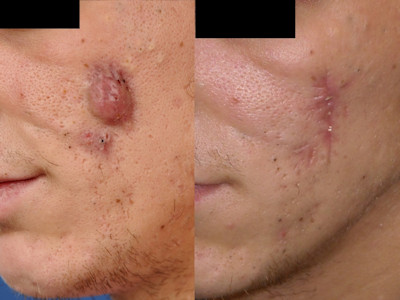
Scars, abscess cavities, and cysts that are very thick and will not go away can be surgically removed.
 |
|
removing cysts |
WHAT CAN YOU DO YOURSELF?
Do not squeeze the pimples, as this usually has the opposite effect.
Treatment with isotretinoin makes the skin very dry. Use a moisturizing cream for the skin, use a lip
balm, and be careful with contact lenses. Read the package insert carefully.
Do not use a tanning bed, as this does not work well for acne conglobata.
|