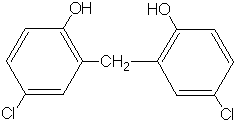
 Background
Dichlorophene is a fungicide and bactericide used in dentifrices, shampoos, antiperspirant and deodorant creams, powder, toilet waters, and preparations for dermatophytosis of the foot. It is also used extensively as a mildewcide to treat and preserve cotton fibers, various fabrics, paper, synthetic leather lattices, and some adhesive tape backings.
Dichlorophene is a more potent sensitizer than hexachlorophene. Although closely related chemically, they rarely cross-react. The U.S. Food and Drug Administration has restricted greatly the use of hexachlorophene for its possible toxic, but not allergic, effect.
Synonyms2,2-Dihydroxydiphenylmethane
Antiphen
Cuniphen
Dicestal
Dichlorophen
Dichlorophene
Didroxane
G-4 (Compound G4)
Hyosan
Parabis
Teniathane
Teniatol
Westpuril
UsesBandages (soft casts)
Cosmetics
Dentifrices, toothpaste, and mouthwashes
Deodorants
Foot powders
Shampoos
Soaps and cleansers
Treated fabrics, papers, adhesives, and bandages
Cross-ReactionsHexachlorophene
Back to list of contact allergens
Referenties
| 1. |
Fisher, A.A. and I. Tobin, Sensitivity
to compound G-4 ('Dichlorophene') in dentrifices. Journal of The
American Medical Association, 1953. 151: p. 988. |
| 2. |
Epstein, E., Dichlorophene allergy.
Annals of Allergy, 1966. 24: p. 437. |
| 3. |
Schorr, W.F., Dichlorphene (G-4)
allergy. Archives of Dermatology, 1970. 102: p. 515. |
Author(s):Allergology: background information on allergens.
 ICD10: L23.9